AAU universities conduct a majority of the federally funded university research that contributes to our economic competitiveness, health and well-being, and national security. AAU universities are growing our economy through invention and innovation while preparing the next generation of scientists and engineers for global leadership. By moving research into the marketplace AAU universities are helping to create jobs, and provide society with new medicines and technologies.
A study by researchers at Duke University School of Medicine found that supplying healthy mitochrondra to damaged nerve cells can signifantly help millions managing pain from diabetic neuropathy and chemotherapy.

Researchers from the USF College of Marine Science are studying soft tissue samples from barnacles, oysters, and fish to better understand the state of contamination and its origins in Tampa Bay, Florida's largest estuary.
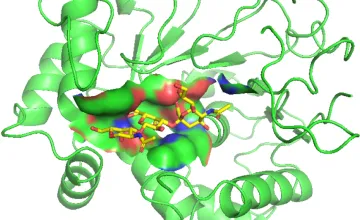
The advancement lays the groundwork for creating a library of sugar-recognizing proteins that may help detect and treat diverse illnesses.

The olfactory senses of ants help them hunt, detect outsiders, and know their role within a colony. In a new study, researchers have discovered how ants can switch one gene on out of hundreds to ensure their survival.
Explore More: University Research
You can filter stories by the university.
The first compound targeting Fatty Acid Binding Proteins (FABPs) for cancer-related pain & inflammation, developed through a Stony Brook research collaboration, has been cleared by the FDA for human trials.
Researchers at the University of Chicago have identified a significant increase in the use of AI tools in scientific writing, particularly in oncology literature.
A University of South Florida study reveals that digital ordering platforms in restaurants influence consumer behavior, leading to more indulgent food choices and increased spending.
Researchers from Johns Hopkins University have conducted high-energy laser experiments to study magnesium oxide under extreme conditions, revealing significant insights into the mineral's behavior, which could influence our understanding of planet formation.
Borrowing methods from biological imaging, Rochester engineers have developed a way to spot tiny, overheated components that cause electronics’ performance to degrade.
When electronic devices like laptops or smartphones overheat, they are fundamentally suffering from a nanoscale heat tr