
AAU universities conduct a majority of the federally funded university research that contributes to our economic competitiveness, health and well-being, and national security. AAU universities are growing our economy through invention and innovation while preparing the next generation of scientists and engineers for global leadership. By moving research into the marketplace AAU universities are helping to create jobs, and provide society with new medicines and technologies.
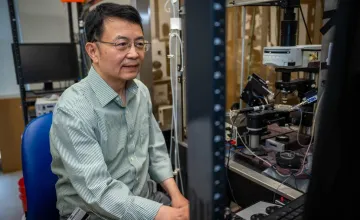
A study by researchers at Duke University School of Medicine found that supplying healthy mitochrondra to damaged nerve cells can signifantly help millions managing pain from diabetic neuropathy and chemotherapy.

Researchers from the USF College of Marine Science are studying soft tissue samples from barnacles, oysters, and fish to better understand the state of contamination and its origins in Tampa Bay, Florida's largest estuary.

The advancement lays the groundwork for creating a library of sugar-recognizing proteins that may help detect and treat diverse illnesses.

The olfactory senses of ants help them hunt, detect outsiders, and know their role within a colony. In a new study, researchers have discovered how ants can switch one gene on out of hundreds to ensure their survival.
Explore More: University Research
You can filter stories by the university.
In the race to build the world’s first fully functional quantum computer, USC scientists report research gains that could make the wonder technology ready to begin solving big challenges in as soon as a few years.
A new study shows that healthy people who take attention deficit hyperactivity disorder (ADHD) drugs experience a surge in the neurotransmitter glutamate in key parts of the brain. And that increase in glutamate is associated with subsequent changes in positive emotion.
A new study finds only half of the women who could benefit from genetic testing get it, and often not before they have surgery.
A new study from the University of Iowa reinforces the connection between good nutrition and good grades, finding that free school breakfasts help students from low-income families perform better academically.
Consumer products such as shampoo, cleaning products, and paint now contribute as much to urban air pollution as tailpipe emissions from vehicles, according to a new study.