
AAU universities conduct a majority of the federally funded university research that contributes to our economic competitiveness, health and well-being, and national security. AAU universities are growing our economy through invention and innovation while preparing the next generation of scientists and engineers for global leadership. By moving research into the marketplace AAU universities are helping to create jobs, and provide society with new medicines and technologies.
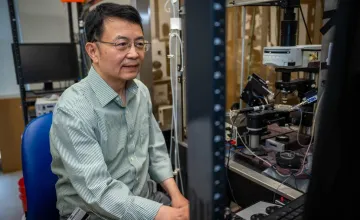
A study by researchers at Duke University School of Medicine found that supplying healthy mitochrondra to damaged nerve cells can signifantly help millions managing pain from diabetic neuropathy and chemotherapy.

Researchers from the USF College of Marine Science are studying soft tissue samples from barnacles, oysters, and fish to better understand the state of contamination and its origins in Tampa Bay, Florida's largest estuary.
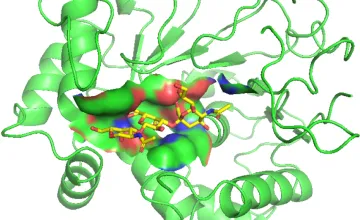
The advancement lays the groundwork for creating a library of sugar-recognizing proteins that may help detect and treat diverse illnesses.
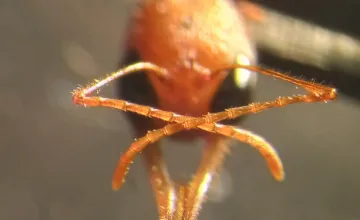
The olfactory senses of ants help them hunt, detect outsiders, and know their role within a colony. In a new study, researchers have discovered how ants can switch one gene on out of hundreds to ensure their survival.
Explore More: University Research
You can filter stories by the university.
Scientists at the University of California, Irvine recently verified a new material configuration to facilitate cooling of electronic components. The innovation could potentially be ideal for keeping electronic devices such as smartphones cool during operation.
UCLA biochemists have achieved a first in biology: viewing at near-atomic detail the smallest protein ever seen, using a technique called cryo-electron microscopy.
Researchers at the University of Washington have designed a convenient and natural product that uses proteins to rebuild tooth enamel and treat dental cavities.
New research with mice suggests that the healing process after breast cancer surgery may trigger dormant cancer cells and lead to a relapse within 12-18 months.
New neuroscience research from the University of Pittsburgh sheds light on how two seemingly different brain processes related to attention are more similar than previously thought, which could someday lead to improved targets for drug researchers.