
AAU universities conduct a majority of the federally funded university research that contributes to our economic competitiveness, health and well-being, and national security. AAU universities are growing our economy through invention and innovation while preparing the next generation of scientists and engineers for global leadership. By moving research into the marketplace AAU universities are helping to create jobs, and provide society with new medicines and technologies.
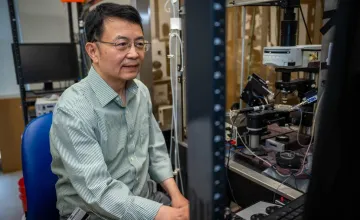
A study by researchers at Duke University School of Medicine found that supplying healthy mitochrondra to damaged nerve cells can signifantly help millions managing pain from diabetic neuropathy and chemotherapy.

Researchers from the USF College of Marine Science are studying soft tissue samples from barnacles, oysters, and fish to better understand the state of contamination and its origins in Tampa Bay, Florida's largest estuary.
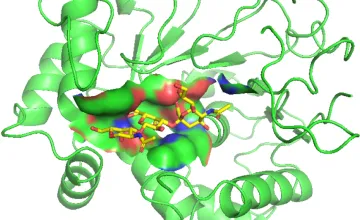
The advancement lays the groundwork for creating a library of sugar-recognizing proteins that may help detect and treat diverse illnesses.
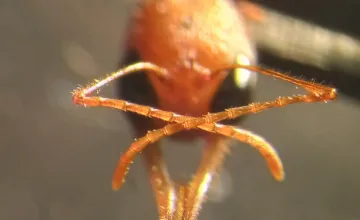
The olfactory senses of ants help them hunt, detect outsiders, and know their role within a colony. In a new study, researchers have discovered how ants can switch one gene on out of hundreds to ensure their survival.
Explore More: University Research
You can filter stories by the university.
A new microchip technology capable of optically transferring data could solve a severe bottleneck in current devices by speeding data transfer and reducing energy consumption by orders of magnitude, according to an article published in the April 19, 2018 issue of Nature.
A new automated text messaging service may curb opioid abuse and reduce the likelihood of relapse while also decreasing treatment costs, according to researchers at Washington University School of Medicine and Epharmix, a St. Louis-based digital health company.
Washington University in St. Louis | AAU Universities Battle the Opioid Crisis | Treatment & Prevention | University Research
Berkeley engineers are developing a new technology that could dramatically improve the speed and accuracy of early breast cancer detection through the use of microfluidics.
Education gives people an edge in their later years, helping them to keep dementia at bay and their memories intact, a new USC-led study has found.
University of Southern California | Alzheimers | Researching the Brain, Seeking Cures | University Research
Researchers are making it easier, faster and safer for doctors to use an emerging procedure that uses radio-frequency waves to burn away brain tumors.
University of Southern California | Researching the Brain, Seeking Cures | Brain Tumors | University Research