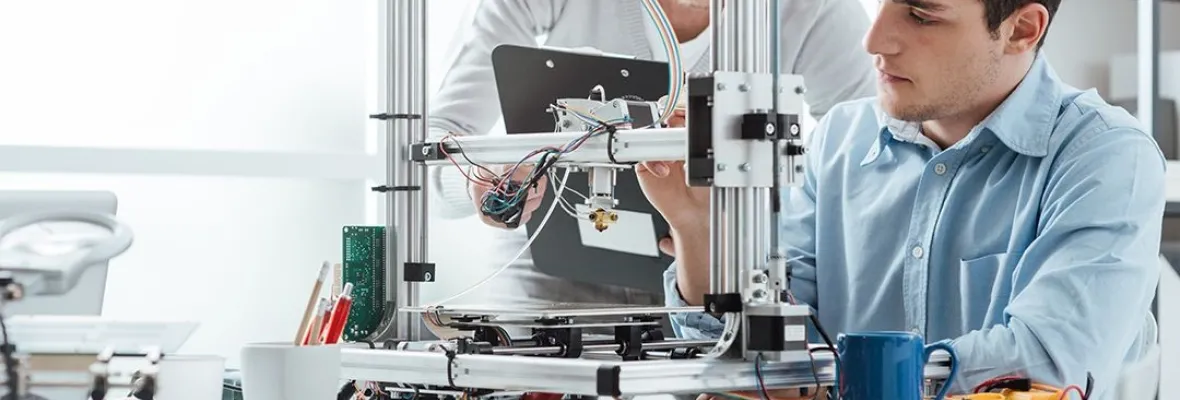
AAU universities conduct a majority of the federally funded university research that contributes to our economic competitiveness, health and well-being, and national security. AAU universities are growing our economy through invention and innovation while preparing the next generation of scientists and engineers for global leadership. By moving research into the marketplace AAU universities are helping to create jobs, and provide society with new medicines and technologies.
A study by researchers at Duke University School of Medicine found that supplying healthy mitochrondra to damaged nerve cells can signifantly help millions managing pain from diabetic neuropathy and chemotherapy.

Researchers from the USF College of Marine Science are studying soft tissue samples from barnacles, oysters, and fish to better understand the state of contamination and its origins in Tampa Bay, Florida's largest estuary.
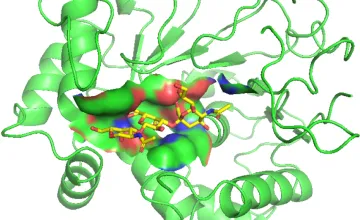
The advancement lays the groundwork for creating a library of sugar-recognizing proteins that may help detect and treat diverse illnesses.
The olfactory senses of ants help them hunt, detect outsiders, and know their role within a colony. In a new study, researchers have discovered how ants can switch one gene on out of hundreds to ensure their survival.
Explore More: University Research
You can filter stories by the university.
a postdoctoral researcher at the University of Oregon is investigating the link between zinc deficiency and the risk of developing Alzheimer's disease. Her research focuses on how zinc affects artery health, particularly in older adults, whose zinc levels naturally decrease with age.
New research from the University of Washington found that lockdowns during the COVID-19 pandemic resulted in unusually accelerated brain maturation in adolescents.
A team of researchers from Penn State developed an ultrathin optical element known as a metasurface, which can attach to a conventional camera and encode the spectral and polarization data of images captured in a snapshot or video through tiny, antenna-like nanostructures that tailor light properties.
The new model for how the brain directs movements from UChicago works like a record player in a bowl, where tilting it at different angles gets different results.
The overlap between humans and animals will increase substantially across much of the planet in less than 50 years due to human population growth and climate change, according to a collaborative study by scientists at the University of Michigan, the University of Washington and University College London.