
AAU universities conduct a majority of the federally funded university research that contributes to our economic competitiveness, health and well-being, and national security. AAU universities are growing our economy through invention and innovation while preparing the next generation of scientists and engineers for global leadership. By moving research into the marketplace AAU universities are helping to create jobs, and provide society with new medicines and technologies.
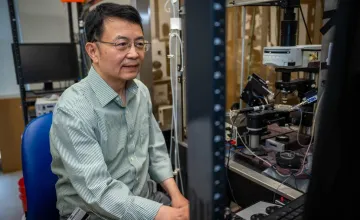
A study by researchers at Duke University School of Medicine found that supplying healthy mitochrondra to damaged nerve cells can signifantly help millions managing pain from diabetic neuropathy and chemotherapy.

Researchers from the USF College of Marine Science are studying soft tissue samples from barnacles, oysters, and fish to better understand the state of contamination and its origins in Tampa Bay, Florida's largest estuary.
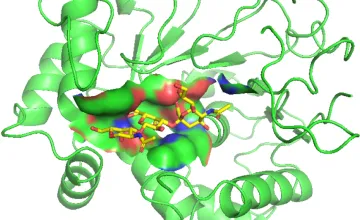
The advancement lays the groundwork for creating a library of sugar-recognizing proteins that may help detect and treat diverse illnesses.
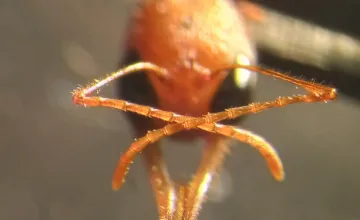
The olfactory senses of ants help them hunt, detect outsiders, and know their role within a colony. In a new study, researchers have discovered how ants can switch one gene on out of hundreds to ensure their survival.
Explore More: University Research
You can filter stories by the university.
Researchers at the University of Pittsburgh have created Painimation, a tablet computer-based app that helps patients give more detail on their body pains with abstract animations.
Researchers at Stony Brook University and the University of Pennsylvania have developed an algorithm that can scan a user's social media posts for linguistic red flags that accurately predict future depression.
Stony Brook University - The State University of New York | Researching the Brain, Seeking Cures | Depression & Schizophrenia | University Research
Young Americans with cancer have a far better prognosis than once thought due to a surprising new discovery about the role of HIV/AIDS, fundamentally altering a long-standing narrative about their cancer mortality, according to new findings by USC scientists.
Cottonseed ground into flour to deliver protein to millions of people, a project to which Dr. Keerti Rathore has devoted more than half his professional career, is one step closer to reality.
Researchers at The University of Pittsburgh are developing a wireless corrosion sensor to prevent pipeline breaks. The technology might also be used to monitor eye pressure in glaucoma patients.