
AAU universities conduct a majority of the federally funded university research that contributes to our economic competitiveness, health and well-being, and national security. AAU universities are growing our economy through invention and innovation while preparing the next generation of scientists and engineers for global leadership. By moving research into the marketplace AAU universities are helping to create jobs, and provide society with new medicines and technologies.

A study by researchers at Duke University School of Medicine found that supplying healthy mitochrondra to damaged nerve cells can signifantly help millions managing pain from diabetic neuropathy and chemotherapy.

Researchers from the USF College of Marine Science are studying soft tissue samples from barnacles, oysters, and fish to better understand the state of contamination and its origins in Tampa Bay, Florida's largest estuary.
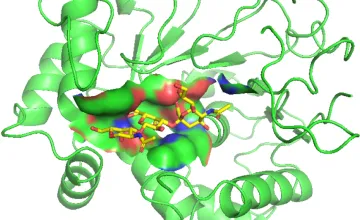
The advancement lays the groundwork for creating a library of sugar-recognizing proteins that may help detect and treat diverse illnesses.
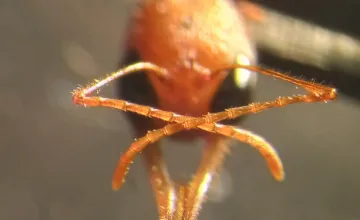
The olfactory senses of ants help them hunt, detect outsiders, and know their role within a colony. In a new study, researchers have discovered how ants can switch one gene on out of hundreds to ensure their survival.
Explore More: University Research
You can filter stories by the university.
Researchers at the University of Rochester have taken a key step which could lead to more efficient quantum devices.
Neurogeneticists at the University of Florida led by Lien Nguyen, Ph.D., and Laura Ranum, Ph.D., have discovered a novel genetic mutation and associated buildup of toxic proteins in the brain — a type of buildup distinct from amyloid or tau, proteins that have long been the focus of Alzheimer’s research.
Researchers at the University of Rochester have engineered a new form of QR codes—called self-authenticating dual-modulated QR (SDMQR)—that can protect smartphone users from these types of attacks by signaling if users are being directed to a safe link or a potential scam.
Continuous positive airway pressure (CPAP) therapy for obstructive sleep apnea is most effective in improving neurocognition in people who have a high arousal threshold, according to a new research analysis.
Gut bacteria are increasingly implicated in non-gut-related autoimmune diseases. Yale researchers have begun to understand how they’re connected.