
AAU universities conduct a majority of the federally funded university research that contributes to our economic competitiveness, health and well-being, and national security. AAU universities are growing our economy through invention and innovation while preparing the next generation of scientists and engineers for global leadership. By moving research into the marketplace AAU universities are helping to create jobs, and provide society with new medicines and technologies.
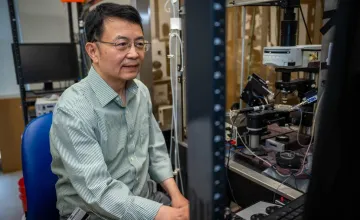
A study by researchers at Duke University School of Medicine found that supplying healthy mitochrondra to damaged nerve cells can signifantly help millions managing pain from diabetic neuropathy and chemotherapy.

Researchers from the USF College of Marine Science are studying soft tissue samples from barnacles, oysters, and fish to better understand the state of contamination and its origins in Tampa Bay, Florida's largest estuary.
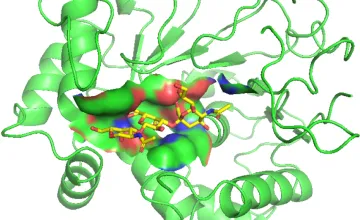
The advancement lays the groundwork for creating a library of sugar-recognizing proteins that may help detect and treat diverse illnesses.
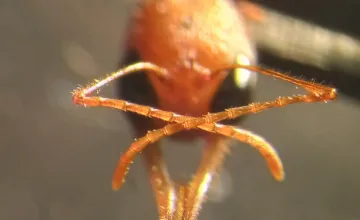
The olfactory senses of ants help them hunt, detect outsiders, and know their role within a colony. In a new study, researchers have discovered how ants can switch one gene on out of hundreds to ensure their survival.
Explore More: University Research
You can filter stories by the university.
A University at Buffalo researcher demonstrated that an electric field can trigger a 'quantum avalanche' that allows nonconductors to turn into conductors.
A report by scientists offers the first genomic evidence that Atlantic cod evolved new traits over only decades during a period of overfishing – evolutionary changes that scientists formerly believed could take millions of years.
Two researchers have proposed a new scientific subfield: planetary geoarchaeology, the study of how cultural & natural processes on Earth’s moon, Mars, & the solar system may be preserving or destroying the material record of space exploration.
the new book “Duck and Cover: Confronting and Correcting Dubious Practices in Education” , examines several educational policies still used in schools despite their ineffectiveness.
Purdue quantum researchers twist double bilayers of an antiferromagnet to demonstrate tunable moiré magnetism
Twistronics isn’t a new dance move, exercise equipment, or new music fad. No, it’s much cooler than any of that.