
AAU universities conduct a majority of the federally funded university research that contributes to our economic competitiveness, health and well-being, and national security. AAU universities are growing our economy through invention and innovation while preparing the next generation of scientists and engineers for global leadership. By moving research into the marketplace AAU universities are helping to create jobs, and provide society with new medicines and technologies.
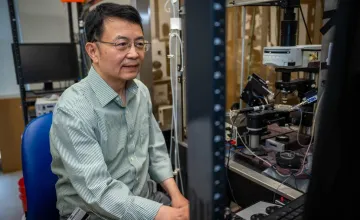
A study by researchers at Duke University School of Medicine found that supplying healthy mitochrondra to damaged nerve cells can signifantly help millions managing pain from diabetic neuropathy and chemotherapy.

Researchers from the USF College of Marine Science are studying soft tissue samples from barnacles, oysters, and fish to better understand the state of contamination and its origins in Tampa Bay, Florida's largest estuary.
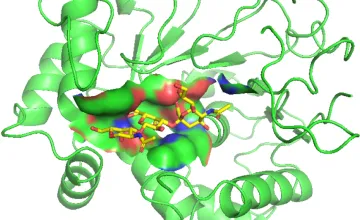
The advancement lays the groundwork for creating a library of sugar-recognizing proteins that may help detect and treat diverse illnesses.
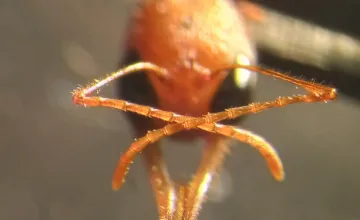
The olfactory senses of ants help them hunt, detect outsiders, and know their role within a colony. In a new study, researchers have discovered how ants can switch one gene on out of hundreds to ensure their survival.
Explore More: University Research
You can filter stories by the university.
A new study by Rice University bioscientists explains how basic cellular structures common to most life forms collaborate to fuel growth in a model plant organism.
Two Stony Brook University chemistry professors are conducting research using the Relativistic Heavy Ion Collider (RHIC) STAR detector that may lead to a deeper understanding of the properties and dynamics of the matter known as a quark-gluon plasma (QGP)
Researchers at USC Dornsife are finding better ways to harness nature’s bounty, from kelp to sun beams, in order to power our industrialized world.
Researchers at Purdue University are advancing the world of robotics and autonomy with their patent-pending method that improves on traditional machine vision and perception.
Rather than being solely detrimental, cracks in the positive electrode of lithium-ion batteries reduce battery charge time, research done at the University of Michigan shows.