
AAU universities conduct a majority of the federally funded university research that contributes to our economic competitiveness, health and well-being, and national security. AAU universities are growing our economy through invention and innovation while preparing the next generation of scientists and engineers for global leadership. By moving research into the marketplace AAU universities are helping to create jobs, and provide society with new medicines and technologies.
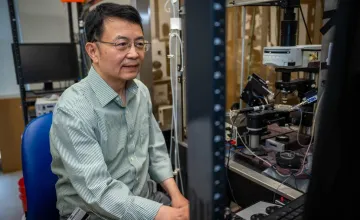
A study by researchers at Duke University School of Medicine found that supplying healthy mitochrondra to damaged nerve cells can signifantly help millions managing pain from diabetic neuropathy and chemotherapy.

Researchers from the USF College of Marine Science are studying soft tissue samples from barnacles, oysters, and fish to better understand the state of contamination and its origins in Tampa Bay, Florida's largest estuary.
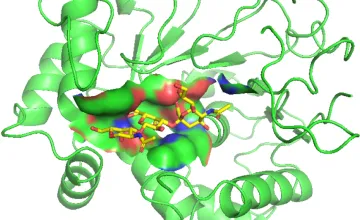
The advancement lays the groundwork for creating a library of sugar-recognizing proteins that may help detect and treat diverse illnesses.
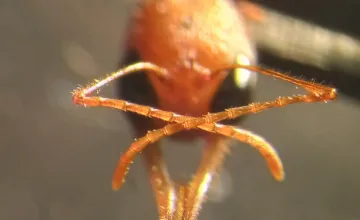
The olfactory senses of ants help them hunt, detect outsiders, and know their role within a colony. In a new study, researchers have discovered how ants can switch one gene on out of hundreds to ensure their survival.
Explore More: University Research
You can filter stories by the university.
Two projects have been awarded funding through Princeton’s Eric and Wendy Schmidt Transformative Technology Fund.
New research led by the University of Washington analyzes the most recent ice age, when a large swath of North America was covered in ice, to better understand the relationship between CO2 and global temperature.
The warming of the planet is causing a year-round, worldwide trend toward more intense but less frequent rainfalls, a dynamic that will increasingly impact plants worldwide, according to a University of Maryland-led study.
A new study by an interdisciplinary team of researchers at The University of Texas at Austin provides the most reliable validation to date of the connection between physical activity, sleep quality and psychological health.
A team led by researchers at the University of Washington developed a new PCB that performs on par with traditional materials and can be recycled repeatedly with negligible material loss.