International students are vital to the STEM talent pipeline and the U.S. economy. America’s leading research universities are magnets for global talent in STEM fields, which drive economic growth through research and development (R&D). This results in new companies and industries and creates millions of high-wage jobs.
Some key facts:
- International students added $43 billion to the American economy - just last year.
- Immigrants founded more than half of unicorn startups. This means privately held companies valued at $1 billion or more, like SpaceX, CrowdStrike, Zoom, and Instacart.
- Defense-related industries rely heavily on STEM workers. Half of these workers are foreign-born.
Recently, the administration has proposed policies which put American science at risk. AAU urges Congress to help the United States win the race for global scientific talent. For that reason, AAU opposes policies that:
- End duration of status for student visa holders.
- Delay, deny, or revoke student visas without due process.
- Impose broad travel bans and processing pauses that limit students, researchers, educators, and skilled professionals.
- Restrict the Optional Practical Training program for student visa holders.
- Make harmful changes to the H-1B visa program.
Such policies would harm U.S. leadership in science and cause our nation to lose the global race for scientific talent. Instead of attracting scientists, it could, and is, causing brain drain: when scientists eave America. We stand ready to work with Congress to keep America dominant in science and technology.

The Association of American Universities (AAU) urges Congress to reject policies that make it harder for the United States to attract and retain the best and brightest students and scholars from around the world and other high-skilled foreign talent.

The Trump administration’s deep cuts to federal funding of scientific research, crackdown on universities, and proposals aimed at deterring international talent have unleashed a loss of scientific talent – a brain drain - away from the United States to other countries.
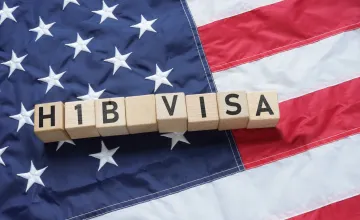
This page will be updated regularly to provide new information as it becomes available regarding the AAU-Chamber of Commerce legal action contesting the implementation of a $100,000 fee for H1-B visa petitions.
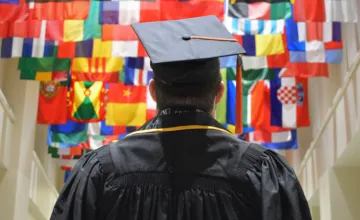
DHS and ICE have proposed a rule that would make it harder for international students to complete their degree programs in the United States, obtain practical work experience upon graduation, or move on to another degree level.
Browse recent items or search for a specific topic or document.
AAU, ACE, and 23 other higher education organizations and associations sent a letter to Secretary of State Antony Blinken and Secretary of Homeland Security Alejandro Mayorkas with questions about COVID-19 travel restrictions and National Interest Exceptions for students and academics traveling to the United States this fall.
AAU, ACE, and 39 other associations sent a letter requesting a briefing from State Department officials on the implications of Presidential Proclamation 10043, “Suspension of Entry as Nonimmigrants of Certain Students and Researchers from the People’s Republic of China,” for international students and scholars.
AAU joined CUPA-HR and other higher education associations in a comment letter to the Department of Labor. The letter came in response to a department request for information on a rule, published near the end of the previous administration, on determining prevailing wages for certain immigrants and other workers.
AAU joined ACE and more than 30 other higher education associations in submitting comments to United States Citizenship and Immigration Services. It outlines several ways the agency can remove administrative barriers to immigration and international education in the United States by revising rules or issuing new administrative policies.
AAU joined APLU, NAFSA, and NAICU in sending a letter to House and Senate appropriators urging them to support the U.S. Department of State's Educational and Cultural Exchange Programs, specifically EducationUSA, a network of over 430 international student advising centers in more than 175 countries and territories. The letter recommends EducationUSA receive $50 million in FY2022, an increase of $37 million above FY 2021
Letters | FY22 | Federal Budget | Immigration