
AAU universities conduct a majority of the federally funded university research that contributes to our economic competitiveness, health and well-being, and national security. AAU universities are growing our economy through invention and innovation while preparing the next generation of scientists and engineers for global leadership. By moving research into the marketplace AAU universities are helping to create jobs, and provide society with new medicines and technologies.
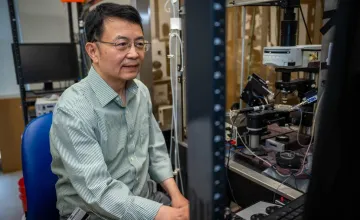
A study by researchers at Duke University School of Medicine found that supplying healthy mitochrondra to damaged nerve cells can signifantly help millions managing pain from diabetic neuropathy and chemotherapy.

Researchers from the USF College of Marine Science are studying soft tissue samples from barnacles, oysters, and fish to better understand the state of contamination and its origins in Tampa Bay, Florida's largest estuary.
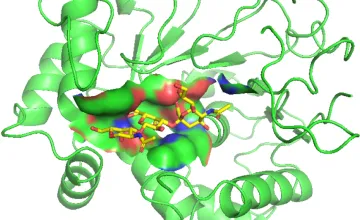
The advancement lays the groundwork for creating a library of sugar-recognizing proteins that may help detect and treat diverse illnesses.
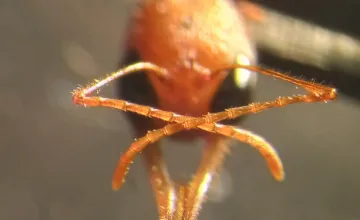
The olfactory senses of ants help them hunt, detect outsiders, and know their role within a colony. In a new study, researchers have discovered how ants can switch one gene on out of hundreds to ensure their survival.
Explore More: University Research
You can filter stories by the university.
Dentists at the UNC School of Dentistry are now using a technique called autotransplantation to relocate a child’s “throwaway” tooth — such as a wisdom tooth — to another spot in their mouth and repair their smiles.
A genetic disruption strategy developed by CU Boulder researchers effectively stymies the evolution of antibiotic-resistant bacteria such as E. coli, giving scientists a crucial leg up in the ongoing battle against deadly superbugs.
Researchers have identified intrinsic cell properties that influence the fate of neural stem cells, a discovery that could lead to improving their use in transplantation therapies.
Researchers at Cornell University have developed a highly accurate mathematical approach to predict crowd behavior.
Ethnobotanist Cassandra Quave leads students in a search for secrets of ancient remedies that may benefit modern medicine.