
AAU universities conduct a majority of the federally funded university research that contributes to our economic competitiveness, health and well-being, and national security. AAU universities are growing our economy through invention and innovation while preparing the next generation of scientists and engineers for global leadership. By moving research into the marketplace AAU universities are helping to create jobs, and provide society with new medicines and technologies.
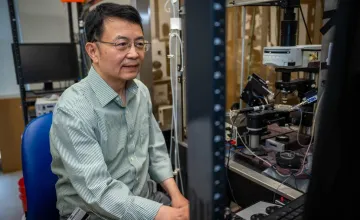
A study by researchers at Duke University School of Medicine found that supplying healthy mitochrondra to damaged nerve cells can signifantly help millions managing pain from diabetic neuropathy and chemotherapy.

Researchers from the USF College of Marine Science are studying soft tissue samples from barnacles, oysters, and fish to better understand the state of contamination and its origins in Tampa Bay, Florida's largest estuary.
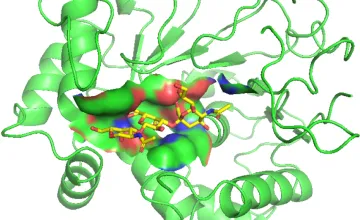
The advancement lays the groundwork for creating a library of sugar-recognizing proteins that may help detect and treat diverse illnesses.

The olfactory senses of ants help them hunt, detect outsiders, and know their role within a colony. In a new study, researchers have discovered how ants can switch one gene on out of hundreds to ensure their survival.
Explore More: University Research
You can filter stories by the university.
UC Irvine and University of Bristol researchers warn that outdated “bathtub models” oversimplify flood risks, urging the use of advanced dynamic modeling for more accurate climate adaptation planning.
A Boston University study found CTE in 18 of 19 NHL players and showed a 34% higher risk for each year of hockey played, raising urgent questions about head injuries and safety in the sport.
UC Irvine researchers uncovered atomic-scale mechanics that boost superconductivity in iron selenide films, paving the way for advances in quantum computing, maglev transport, and medical technologies.
Mangroves have been shown to provide $855 billion in flood protection services worldwide, according to a new study from the Center for Coastal Climate Resilience at UC Santa Cruz. The research is featured in the World Bank’s 2024 edition of The Changing Wealth of Nations.
Researchers are developing real-time voice-changing tech that lets users control age, gender, and accent, helping protect privacy for whistleblowers, witnesses, and intelligence agents.