
AAU universities conduct a majority of the federally funded university research that contributes to our economic competitiveness, health and well-being, and national security. AAU universities are growing our economy through invention and innovation while preparing the next generation of scientists and engineers for global leadership. By moving research into the marketplace AAU universities are helping to create jobs, and provide society with new medicines and technologies.
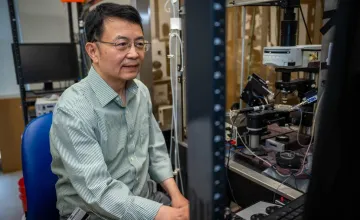
A study by researchers at Duke University School of Medicine found that supplying healthy mitochrondra to damaged nerve cells can signifantly help millions managing pain from diabetic neuropathy and chemotherapy.

Researchers from the USF College of Marine Science are studying soft tissue samples from barnacles, oysters, and fish to better understand the state of contamination and its origins in Tampa Bay, Florida's largest estuary.
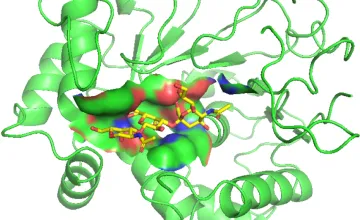
The advancement lays the groundwork for creating a library of sugar-recognizing proteins that may help detect and treat diverse illnesses.
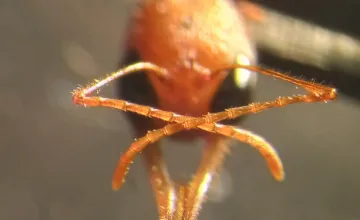
The olfactory senses of ants help them hunt, detect outsiders, and know their role within a colony. In a new study, researchers have discovered how ants can switch one gene on out of hundreds to ensure their survival.
Explore More: University Research
You can filter stories by the university.
A new study used innovative markerless motion capture technology to determine the mechanics of proficient free-throw shooters and help better understand one of the biggest keys to success in basketball.
From the thousands of feet of frozen glaciers to the rising seas off Savannah’s coast, Georgia Institute of Technology researchers are measuring, modeling, and predicting just how climate change is impacting our oceans.
The U.S. Department of Energy has made a $3 million investment in Purdue University-led research showing
how a novel high-temperature heat pump promises to significantly reduce energy use and greenhouse gas emissions.
Study identifies neural dynamics that our visual system uses to transform what we see into what we do.
More than 100 policymakers, community leaders and researchers met on the UCI campus to craft solutions for Orange County’s top concerns: homelessness and the lack of affordable housing in the county.