
AAU universities conduct a majority of the federally funded university research that contributes to our economic competitiveness, health and well-being, and national security. AAU universities are growing our economy through invention and innovation while preparing the next generation of scientists and engineers for global leadership. By moving research into the marketplace AAU universities are helping to create jobs, and provide society with new medicines and technologies.
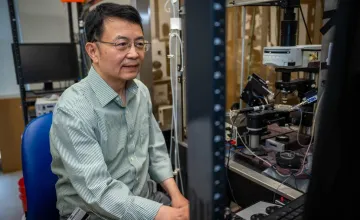
A study by researchers at Duke University School of Medicine found that supplying healthy mitochrondra to damaged nerve cells can signifantly help millions managing pain from diabetic neuropathy and chemotherapy.

Researchers from the USF College of Marine Science are studying soft tissue samples from barnacles, oysters, and fish to better understand the state of contamination and its origins in Tampa Bay, Florida's largest estuary.
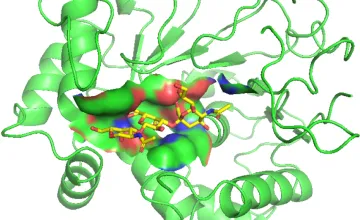
The advancement lays the groundwork for creating a library of sugar-recognizing proteins that may help detect and treat diverse illnesses.

The olfactory senses of ants help them hunt, detect outsiders, and know their role within a colony. In a new study, researchers have discovered how ants can switch one gene on out of hundreds to ensure their survival.
Explore More: University Research
You can filter stories by the university.
A working paper by Harvard researchers investigates the prevalence and political implications of zero-sum thinking in the U.S., a mindset where one group's gain is perceived as another's loss.
Sequencing of full-length viral RNA reveals molecular-level effect
A chemical modification in the HIV-1 RNA genome whose function has been a matter of scientific debate is now confirmed to be key to the virus’s a
Women are at higher risk of death when undergoing heart bypass surgery than men, and researchers at Cornell have determined that this disparity is mediated, to a large extent, by intraoperative anemia – the loss of red blood cells during surgery.
Johns Hopkins Medicine-led team has shown that d-limonene significantly reduces feelings of anxiety and panic, without altering the desired effect of THC, the active ingredient of cannabis.
Researchers from MIT and the MIT-IBM Watson AI Lab used machine learning to improve safeguards on large language models.