
AAU universities conduct a majority of the federally funded university research that contributes to our economic competitiveness, health and well-being, and national security. AAU universities are growing our economy through invention and innovation while preparing the next generation of scientists and engineers for global leadership. By moving research into the marketplace AAU universities are helping to create jobs, and provide society with new medicines and technologies.
A study by researchers at Duke University School of Medicine found that supplying healthy mitochrondra to damaged nerve cells can signifantly help millions managing pain from diabetic neuropathy and chemotherapy.

Researchers from the USF College of Marine Science are studying soft tissue samples from barnacles, oysters, and fish to better understand the state of contamination and its origins in Tampa Bay, Florida's largest estuary.
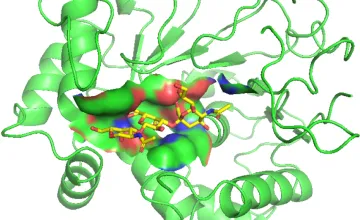
The advancement lays the groundwork for creating a library of sugar-recognizing proteins that may help detect and treat diverse illnesses.
The olfactory senses of ants help them hunt, detect outsiders, and know their role within a colony. In a new study, researchers have discovered how ants can switch one gene on out of hundreds to ensure their survival.
Explore More: University Research
You can filter stories by the university.
University of Texas at Austin researchers create a network of underground sensors in the Texas Hill Country will arm those responsible for managing the state’s finite water supply with vital information for determining the chances of drought and dangerous floods.
Women tend to become addicted to drugs and relapse faster than men, though the biological reasons are not completely clear.
Emory University’s innovative new water reclamation facility harnesses the power of nature to clean and recycle wastewater for non-potable uses on campus.
Global Environmental Management Initiative (GEMI) and partners, introduced the Supply Chain Sustainability tool which helps businesses identify the purchased inputs that emit the highest levels of GHGs and use the most water in their production.
A team led by a UCSB researcher shows that both water flow and channel capacity are necessary for accurate flood hazard risk assessment.