
AAU universities conduct a majority of the federally funded university research that contributes to our economic competitiveness, health and well-being, and national security. AAU universities are growing our economy through invention and innovation while preparing the next generation of scientists and engineers for global leadership. By moving research into the marketplace AAU universities are helping to create jobs, and provide society with new medicines and technologies.
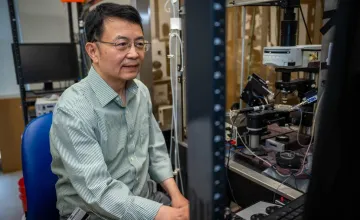
A study by researchers at Duke University School of Medicine found that supplying healthy mitochrondra to damaged nerve cells can signifantly help millions managing pain from diabetic neuropathy and chemotherapy.

Researchers from the USF College of Marine Science are studying soft tissue samples from barnacles, oysters, and fish to better understand the state of contamination and its origins in Tampa Bay, Florida's largest estuary.

The advancement lays the groundwork for creating a library of sugar-recognizing proteins that may help detect and treat diverse illnesses.
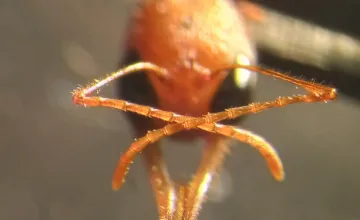
The olfactory senses of ants help them hunt, detect outsiders, and know their role within a colony. In a new study, researchers have discovered how ants can switch one gene on out of hundreds to ensure their survival.
Explore More: University Research
You can filter stories by the university.
Virologist Tijana Ivanovic's lab is looking at how the virus infects cells. Computer scientists Pengyu Hong and Hongfu Liu are using machine learning to map its genetic code.
Michigan State University is helping local health professionals on the front lines of the COVID-19 pandemic caused by the novel coronavirus by making 3D-printed personal protective equipment.
With support from Amazon Web Services, health care providers are using AI in a clinical research study aimed at speeding the detection of pneumonia, a condition associated with severe COVID-19
As Keck Medicine of USC health care workers seek masks, eyewear and other equipment to guard them from the new coronavirus, their colleagues across the university and beyond are stepping up.
Researchers at Duke University are exploring how data collected by smartphones, FitBits, Apple Watches and other smartwatches may help determine whether or not device users have COVID-19, the illness caused by the novel coronavirus.