
AAU universities conduct a majority of the federally funded university research that contributes to our economic competitiveness, health and well-being, and national security. AAU universities are growing our economy through invention and innovation while preparing the next generation of scientists and engineers for global leadership. By moving research into the marketplace AAU universities are helping to create jobs, and provide society with new medicines and technologies.
A study by researchers at Duke University School of Medicine found that supplying healthy mitochrondra to damaged nerve cells can signifantly help millions managing pain from diabetic neuropathy and chemotherapy.

Researchers from the USF College of Marine Science are studying soft tissue samples from barnacles, oysters, and fish to better understand the state of contamination and its origins in Tampa Bay, Florida's largest estuary.
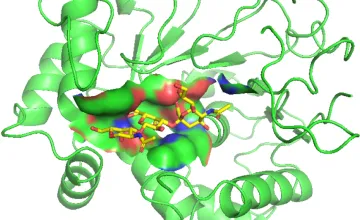
The advancement lays the groundwork for creating a library of sugar-recognizing proteins that may help detect and treat diverse illnesses.
The olfactory senses of ants help them hunt, detect outsiders, and know their role within a colony. In a new study, researchers have discovered how ants can switch one gene on out of hundreds to ensure their survival.
Explore More: University Research
You can filter stories by the university.
100 youths who were leaving the foster care system in Clark County, Nevada reported high rates of homelessness and interaction with the criminal justice system since they left foster care to face the world on their own.
The first-ever mission to study a metal-rich asteroid, the Arizona State University-led Psyche mission aims to help scientists learn more about the formation of rocky bodies in our solar system.
New research shows many fossil fuel workers have the right skills already, the problem is that those new green jobs likely won’t be in the right place.
UC Riverside-led study zeroes in on special RNA molecules in the human malaria parasite.
Using a quantum computer, researchers at Duke University have implemented a method called 'conical intersection' to observe the way light-absorbing molecules interact with incoming photons. This effect puts limitations on the paths molecules can take to change between different configurations.