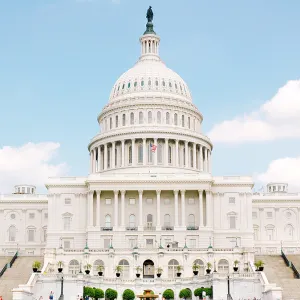
America's leading research universities guard our nation's security by protecting knowledge, trade secrets, and classified information from foreign interference. In fact, AAU members have a vested interest in making sure this is the case. AAU works closely with its members and the government to ensure that appropriate security measures are in place at all times. Our members also work hard to strike a balance between two key priorities. One, that research must remain open to succeed. The integrity of our nation's research depends on it. On the other hand, some sensitive data must also be protected. AAU and APLU have jointly written a guide to help our members deal with this issue. The guide provides principles and values that steer our actions and helps universities limit risks.

Body

As lawmakers consider measures related to securing federally funded research data and intellectual property, it is important to understand the current state of play for research security in the country to avoid new requirements that are duplicative, unnecessary, or counterproductive

Despite the agency’s efforts to make the data more accessible and transparent, flaws in how the dashboard is set up risks misleading the public as well as lawmakers about the true nature and extent of university foreign funding.

A new assessment shows China has officially crept past the United States in total research and development (R&D) investment.

One pager for advocacy focused on securing scientific research against foreign threats.

This resource document identifies key terms; effective practices proposed by institutions and government and non-government entities; links to various government and non-government entity lists, and topical analysis and proposed policy recommendations in several key areas..
Search Our Key Issues Library
Browse recent items or search for a specific topic or document.
AAU and APLU have laid out "Principles and Values to Guide Actions Relevant to Foreign Government Interference in University Research."
Section 223 of the FY21 version of the National Defense Authorization Act (NDAA) addresses disclosure of funding sources in applications for federal research and development awards.
AAU joined ACE and 18 other organizations to send a letter to acting Education Secretary Philip Rosenfelt to request a meeting to discuss the requirements for foreign gift and contract reporting under Section 117 of the Higher Education Act.
"AAU, along with the American Council on Education, the Association of American Medical Colleges, the Association of Public and Land-grant Universities, and the Council on Governmental Relations, submitted this memorandum to the Office of Science and Technology Policy, requesting a comment period for stakeholders to review the “Presidential Memorandum on United States Government-Supported Research and Development National Security Policy (NSPM-33)” and “Recommended Practices for Strengthening the Security and Integrity of America’s Science and Technology Research Enterprise."
AAU submitted comments urging the Education Department to withdraw its recent notice of interpretation regarding its enforcement authority with respect to an institution’s failure to adequately report under Section 117 of the Higher Education Act and instead engage in a rulemaking process.