
"Into the Jaws of Death." Troops approach Omaha Beach, June 6, 1944. Credit: National Archives (photo no. 26-G-2343)
By Tobin Smith
Saturday, June 6, marks the 82nd anniversary of the D‑Day invasion. A new film now in theaters, Pressure, vividly reminds us of the critical role that advances in meteorological science played in ensuring its success – and how important meteorological science, developed significantly by government forecasters and researchers at America’s colleges and universities – has been to the United States’ scientific advancement and economic development since the war.
The film tells the story of the tense days leading up to D‑Day, when Allied commanders (led by Gen. Dwight D. Eisenhower) faced an agonizing choice: launch the invasion under uncertain and worsening weather conditions, or delay and risk losing the narrow tidal window – as well as the crucial element of surprise – essential for the mission’s success.
At the center of that decision was a stark disagreement between two competing approaches to weather forecasting. Group Captain James Stagg, a meticulous Scottish meteorologist, relied on emerging scientific techniques combining real-time barometric data with observations from ships and weather stations across the Atlantic. In contrast, Col. Irving P. Krick, the lead American forecaster, placed greater confidence in historical weather patterns, charts, and the more traditional forecasting methods that had been used up until that time.
Krick confidently predicted clear skies and ideal landing conditions for Monday, June 5, 1944, the original invasion date. Stagg strongly disagreed, warning that a major storm system would make landing on the Normandy beaches impossible and could cost thousands of soldiers’ lives. Eisenhower ultimately trusted Stagg’s more cautious analysis, delaying the invasion by 24 hours. That decision proved decisive: the severe weather Stagg predicted arrived on June 5, while a brief lull on June 6 created the narrow window that made the invasion possible.
When Eisenhower was asked by then-President-elect John F. Kennedy on inauguration day, 1961, what the decisive factor was in his D-Day victory, he was reported to have responded: “We had better meteorologists than the Germans.”
From Wartime Lesson to National Capability
What is not widely appreciated is how deeply the United States internalized that D-Day lesson. In the decades following World War II, the United States made sustained federal investments in scientific research that built the most advanced weather forecasting system in the world.
Today’s forecasting capability is the product of coordinated efforts across many federal science agencies, including the National Oceanic and Atmospheric Administration (NOAA) and its National Weather Service (NWS); the National Science Foundation (NSF); NASA, the Federal Aviation Administration (FAA); the Environmental Protection Agency (EPA); and the Departments of Defense, Energy, and Agriculture. Together, and in close collaboration with national laboratories and research universities, these agencies have developed the satellites that observe weather patterns, the supercomputers that simulate the atmosphere, and the mathematical models that transform raw data into actionable weather forecasts.
University research was particularly crucial to modernizing American meteorological science after the war. Federal investments enabled university researchers to pioneer numerical weather prediction by developing physics‑based mathematical models that simulate atmospheric behavior. Federal research grants to universities also advanced satellite meteorology, radar technology, data assimilation techniques, and high-performance computing methods that allow vast amounts of observational data to be incorporated into weather forecasts, making them much more accurate.
University-led research initiatives and federally funded cooperative institutes such as the National Center for Atmospheric Research (NCAR), the National Severe Storms Laboratory (NSSL), the Storm Prediction Center (SPC), and the National Hurricane Center have helped greatly improve our understanding of life-threatening events like tornadoes, hurricanes, and flash floods as well as broader climate processes. Simultaneously, these government agencies and university programs have trained generations of meteorologists who have gone on to staff not only government forecast offices, but also local TV stations and private companies that depend on weather forecasting to ensure their economic success.
This integrated system of support of meteorological science and weather prediction underpins public safety, supports the productivity of American agriculture and other crucial industries, and enhances national security.
The Value of Accurate Weather Forecasting
The economic case for weather forecasting is compelling. Weather affects both short- and long-term decision-making across nearly every major sector from aviation and shipping to energy markets, agriculture, and retail supply chains. Accurate forecasts reduce uncertainty, allowing businesses to optimize operations, manage risk, and avoid costly disruptions. This translates into improved productivity and billions of dollars in economic value each year.
Weather forecasting is also a critical component of public safety. Technologies such as Doppler radar, developed and refined from the 1950s to the 1980s with federal support from NOAA, NSF, and the Department of Defense, and widely deployed during the 1990s, have dramatically improved the ability to detect and warn about severe weather. For example, tornado warnings can now be issued with as much as an hour of advance notice; this compares to only minutes of advance warning or even no warning at all in the recent past, giving communities valuable time to take shelter and save lives.
Satellite systems developed through partnerships led by NASA and NOAA provide continuous global observations of the atmosphere. These data allow farmers to monitor crop health, manage water use, and anticipate droughts or floods, dramatically improving agricultural productivity, resilience, and food security.
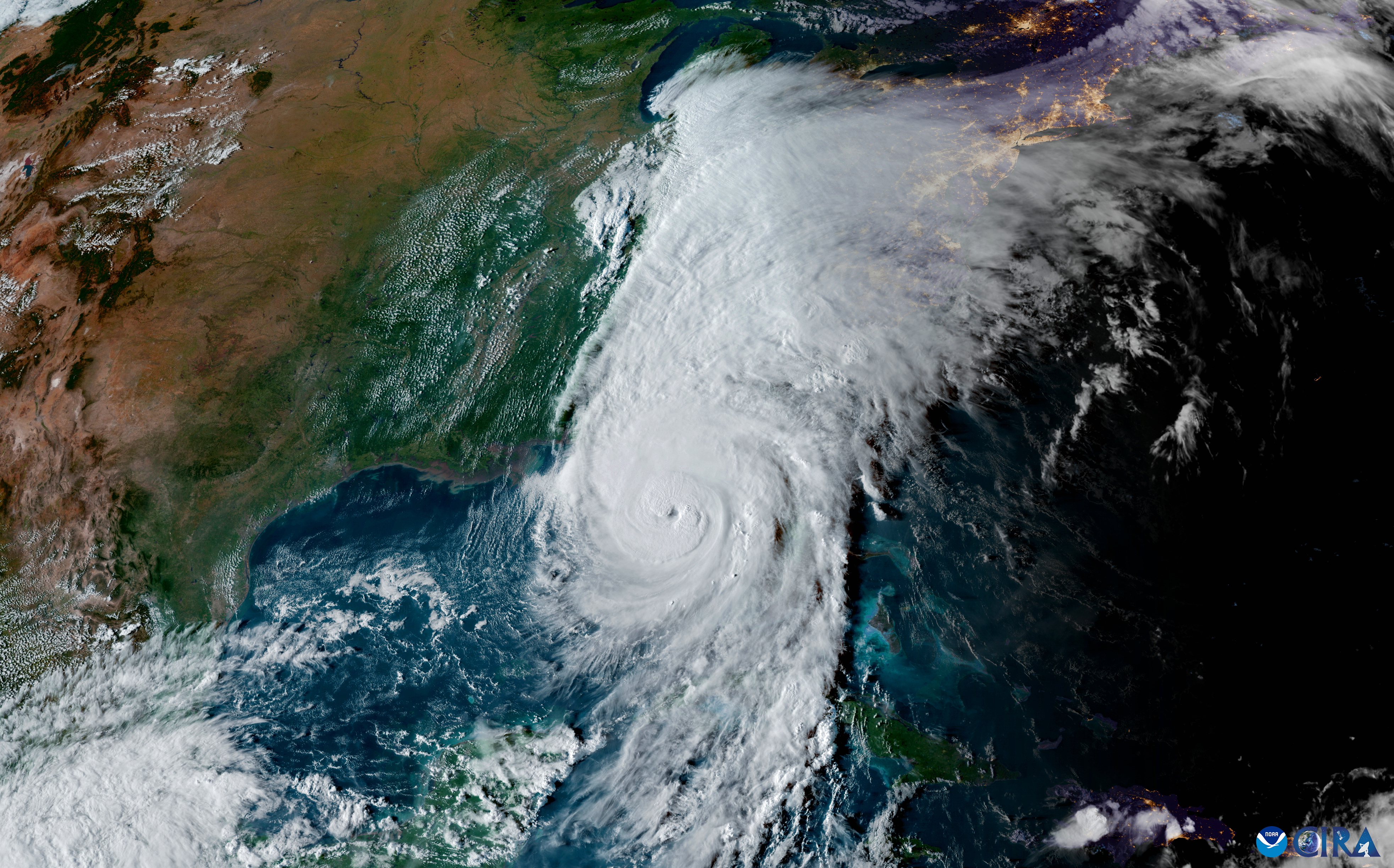
Meanwhile, advances in supercomputing have also transformed forecasting. By processing massive volumes of data from satellites, radar, and observation networks, supercomputers enable scientists to run complex atmospheric models that predict the path and intensity of hurricanes and other extreme events with increasing accuracy. These improvements extend warning times, reduce economic losses, and help communities more effectively prepare for extreme weather events.
Beyond these civilian benefits, weather forecasting remains essential to our national security. Today’s military depends on accurate weather intelligence for flight operations, maritime deployments, and mission planning. Just as on D‑Day, superior weather knowledge continues to provide a strategic advantage.
Why Continued Investment in Understanding and Predicting the Weather Matters
At a time when extreme weather events are becoming more frequent and severe – resulting in stronger hurricanes, more destructive floods, prolonged droughts, and increasing wildfire risks – the scientific foundation that underpins the U.S. weather forecasting system is coming under increased stress. The FY27 presidential budget proposal includes sweeping cuts to key components of the nation’s weather and climate enterprise. These include proposals to eliminate NOAA’s primary research arm, close critical laboratories, reduce funding for satellite-based Earth science, and significantly cut support for university-based research.
The administration has also proposed actions that would effectively eliminate or dismantle the National Center for Atmospheric Research by sharply reducing or redirecting the past NSF funding that has supported its operations and core research programs. For decades, NCAR has been a cornerstone of U.S. meteorological science, leading advances in atmospheric modeling, severe weather prediction, and climate research.
Taken together, these changes would weaken the research, observations, and innovation that sustain our current weather forecasting capabilities.
Remembering the Lesson of D-Day
The lesson of D‑Day endures to the present day: Preparedness depends on foresight, and foresight depends on science.
In 1944, meteorologists relied on sparse data, hand-drawn charts, and expert judgment based on emerging science to guide one of history’s most consequential operations. Today, we benefit from Doppler radar, satellites, supercomputers, and global data networks that would have been unimaginable at the time. But those capabilities exist only because the United States chose, year after year, to invest in the underlying scientific research that enabled them.
At a moment when the stakes are rising, pulling back on that investment would mean weakening one of the nation’s most effective – yet often invisible – tools for ensuring our health and safety, strengthening the economy, and ensuring national security.
The forecast that helped win D‑Day was no accident. It was the product of rigorous science, coordinated intelligence, and a willingness to act on evidence even when doing so was politically difficult. Faced with intense pressure from military leaders to proceed on June 5, Eisenhower chose instead to trust the meteorological analysis, delaying the invasion despite the risks and uncertainty that decision carried. Preserving that advantage today requires the same commitment to science‑based decision-making over expedience.
Tobin Smith is senior vice president for government relations and public policy at AAU.