The United States and China are the world’s highest performing economies. Both countries are competing to be the global leader in science, technology, and geopolitical influence, a reflection of China’s rise on the world stage. At the same time, they are also critical trading partners with intertwined economies. The United States and China are dependent on each other for manufacturing, supply chains, and consumer markets.
China Just Topped the U.S. in R&D Investment
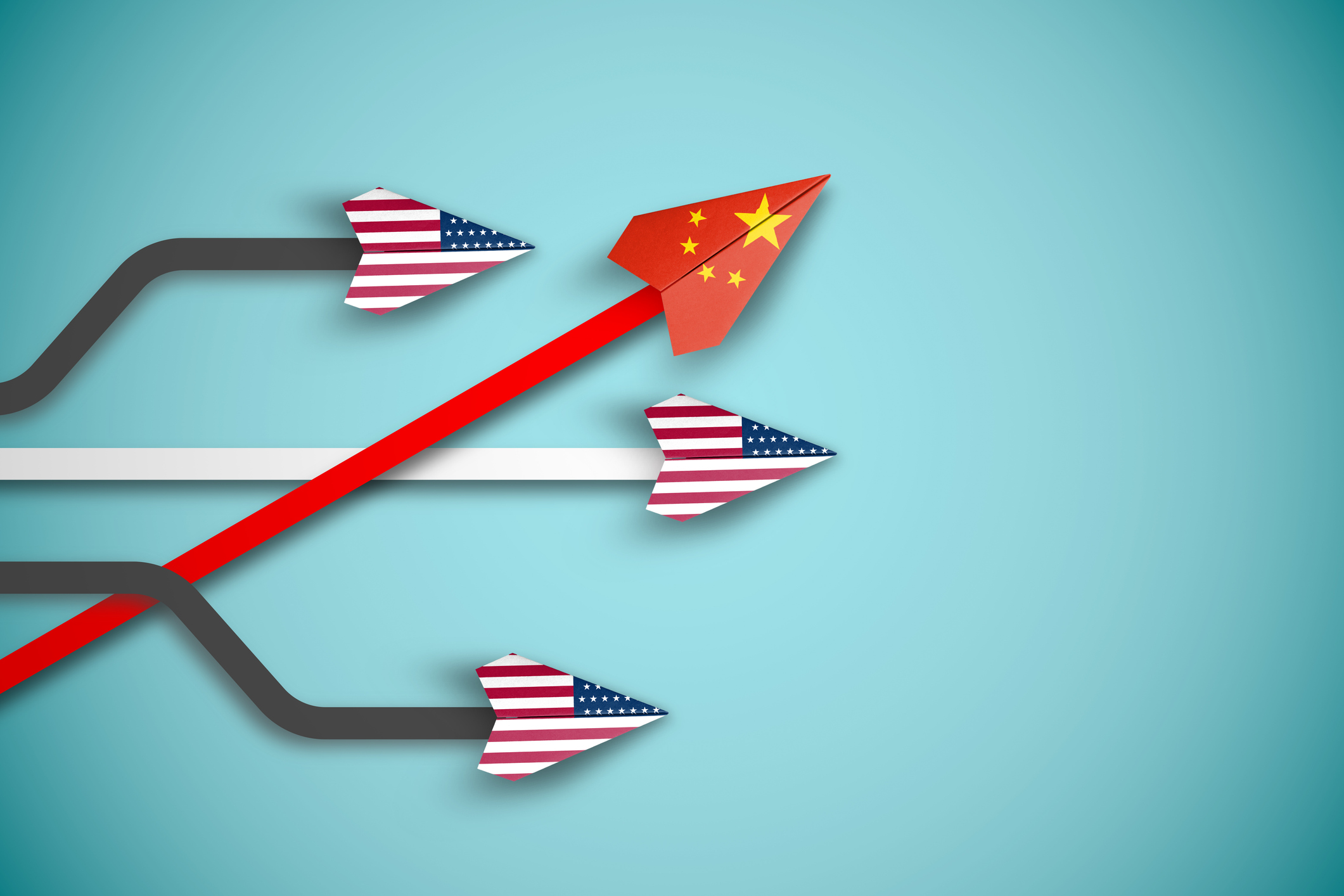
Now, however, we are at a key moment in the history of U.S.–China competition. China recently surpassed the United States in total research and development (R&D) investments. While China’s R&D spending is surging ahead, policymakers in Washington are tapping the brakes on similar investments at home.
Maintaining U.S. Scientific Dominance Depends on University Research
The United States became the global leader in science and technology after World War II. This was possible because the government established federal science agencies and began investing in university research. The U.S. also strengthened its scientific workforce by attracting high-skilled immigrants and international students.
America’s system of publicly funded university research has led to transformative breakthroughs, including gene editing, artificial intelligence, and countless medicines, therapies, and diagnostics.
Keeping the U.S. Lead: Federal Investment in American Research and Our Next Generation of Scientists
Today, China is eclipsing America in its scientific and technological dominance. This is happening at a time when the United States is cutting back on investments in scientific research and restricting the flow of talent. Meanwhile, China is supporting research by building talent pipelines and attracting top scientists.
To stay competitive with China and strengthen our national security, the United States must reject cuts to federally funded scientific research. Welcoming talented students and scholars — wherever they were born — is also necessary for America to maintain scientific dominance. In the competition with China, it is now our race to lose.